

Towards a Shared European Administrative Space: Italian Expertise Meets Regional Innovation
How can public administrations become more digital, resilient and citizen-centred? The answer lies in combining expertise, practical experience and regional cooperation.
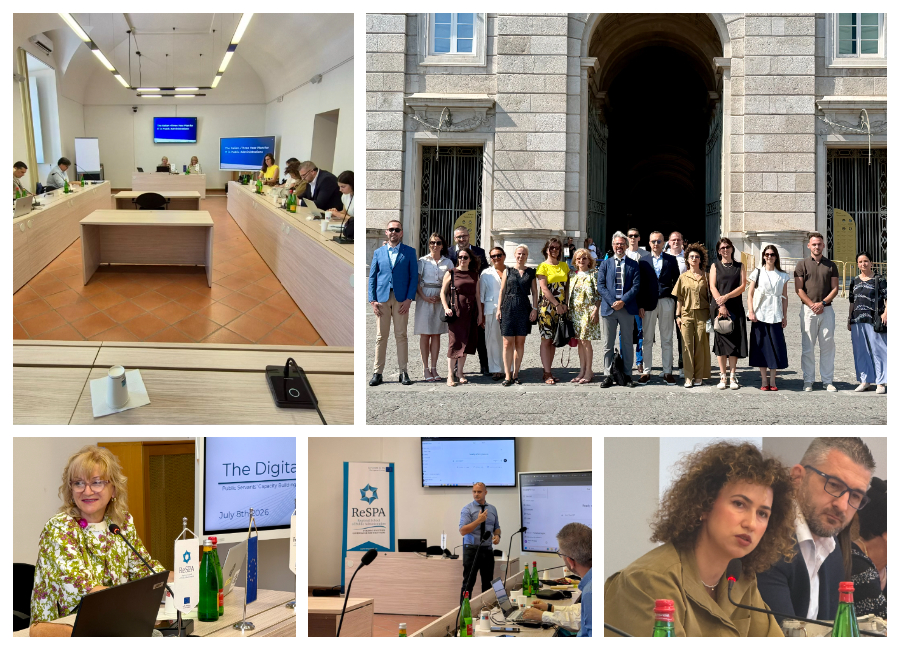
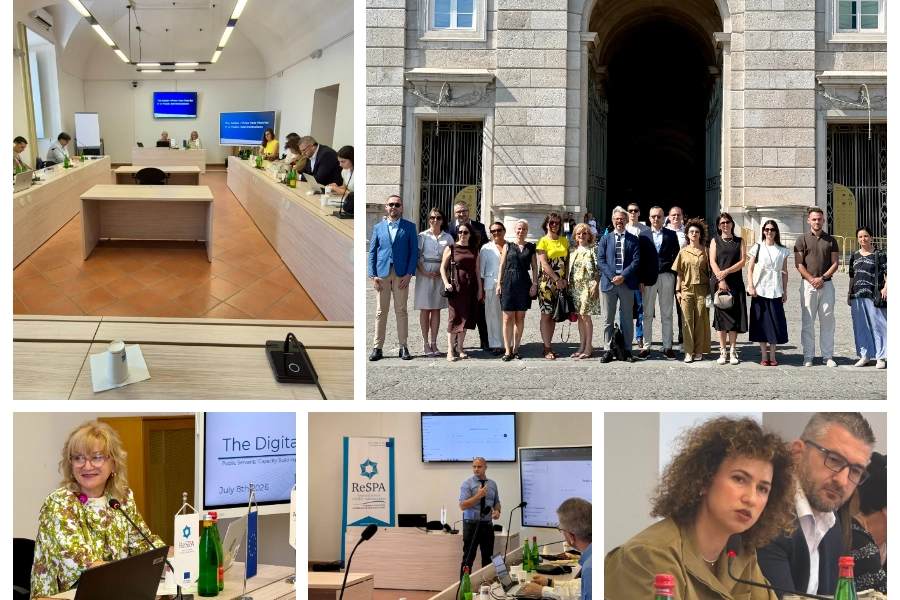
Over three intensive days in Caserta, Italy, public servants from the Western Balkans and Eastern Partnership countries came together for the Public Servants' Capacity Building & Mobility Programme 3.0 - Digital Transformation, jointly organised by the Regional School of Public Administration (ReSPA) and the Italian National School of Administration (SNA), funded by the Italian Ministry of Foreign Affairs and International Cooperation.
More than a training programme, the initiative served as a platform for exchanging ideas, exploring innovative approaches and strengthening cooperation towards a more integrated European Administrative Space.
The programme offered participants a unique opportunity to gain first-hand insights into Italy's digital transformation reforms, combining strategic policy discussions with practical examples of implementation.
Over the course of three days, participants explored:
- Italy's governance model for digital transformation and the Digital Administration Code (CAD);
- The role of the Department for Digital Transformation and AgID in leading digital reforms;
- The Three-Year ICT Plan and key digital government principles, including digital-first, cloud-first, interoperability by design, digital identity, cybersecurity, accessibility and the once-only principle;
- Artificial Intelligence, the EU AI Act and the responsible use of AI in public administration;
- National cloud strategy and digital public infrastructure;
- Cybersecurity, resilience, critical infrastructure protection and implementation of the NIS2 Directive;
- Digital identity, trust services and the future European Digital Identity Wallet (eIDAS 2.0);
- The growing role of AI in developing the skills and capacities of public servants.
The programme also featured renowned Italian academics and practitioners who shared both strategic perspectives and real-world experience:
- Prof. Caterina Flick presented Italy's governance and regulatory framework for digital transformation;
- Prof. Mauro Iacono explored strategic technological drivers, cloud transformation and digital public infrastructure;
- Massimiliano Gambardella showcased practical lessons from PagoPA and Italy's national digital platforms;
- Prof. Giancarlo Sperlì examined Artificial Intelligence, the EU AI Act and trustworthy AI for public administration;
- Prof. Roberto Setola discussed cybersecurity, resilience and critical infrastructure protection;
- Bernardo Palazzi, from Italy's National Cybersecurity Agency (ACN), demonstrated practical applications of cybersecurity and AI;
- Prof. Alessandra De Benedictis explored digital identity, trust services and the European Digital Identity Wallet;
- Prof. Mario Pireddu concluded the programme by demonstrating how AI is transforming learning, skills development and human resource management in public administration.
Learning was far from one-directional. Participants from Albania, Bosnia and Herzegovina, Montenegro, North Macedonia, Serbia and Kosovo* shared their own digital transformation journeys, presenting reforms in interoperability, digital identity, cybersecurity, open data, digital public services and legislative developments.
These exchanges created a vibrant peer-learning environment, demonstrating that while each administration faces unique challenges, many solutions can be developed together. By learning from one another, participants strengthened regional cooperation and reinforced their shared commitment to building modern, efficient and citizen-oriented public administrations.
Reflecting on the programme, Bojana Bajić, Officer for Digitalisation and Innovation at ReSPA, emphasised: "Digital transformation is not only about technology—it is about creating resilient, interoperable, secure and citizen-centred public administrations. By combining Italian expertise with regional experience and peer learning, we are strengthening institutional capacities and taking concrete steps towards a shared European Administrative Space."
ReSPA extends its sincere appreciation to the Italian National School of Administration (SNA), all professors, experts and speakers for generously sharing their expertise, and to every participant whose active engagement and valuable contributions made the programme a true success.
By connecting international expertise with regional ownership and practical collaboration, ReSPA continues to support public administrations in accelerating digital transformation and bringing the region closer to a stronger, more connected and more resilient European Administrative Space.
* This designation is without prejudice to positions on status and is in line with UNSCR 1244 and ICJ opinion on the Kosovo Declaration of Independence.