

ReSPA and EKDDA Bring Future Governance to the Forefront in Second Consecutive High-Level Programme on Foresight, AI and EU Enlargement
12–13 May 2026, Athens, Greece
How can public administrations prepare for the challenges while managing the demands of EU accession today? How can artificial intelligence strengthen governance without compromising trust, transparency and accountability? And what can the Western Balkans learn from Greece’s European journey?
These were some of the key questions explored during the two-day regional programme “Foresight, AI and EU Enlargement: A Two-Day Capacity-Building Programme for Public Administrations from the Western Balkans and Eastern Partnership Countries”, organised jointly by ReSPA and the EKDDA, in partnership with the National School of Public Administration (ESDDA) and the Special Secretariat for Foresight of the Presidency of the Government of Greece.
Now in its second consecutive year, the initiative once again brought together senior public officials, governance experts and institutional representatives from the Western Balkans and Eastern Partnership countries to explore how administrations can become more resilient, strategic and future-ready in an increasingly complex geopolitical and technological environment.
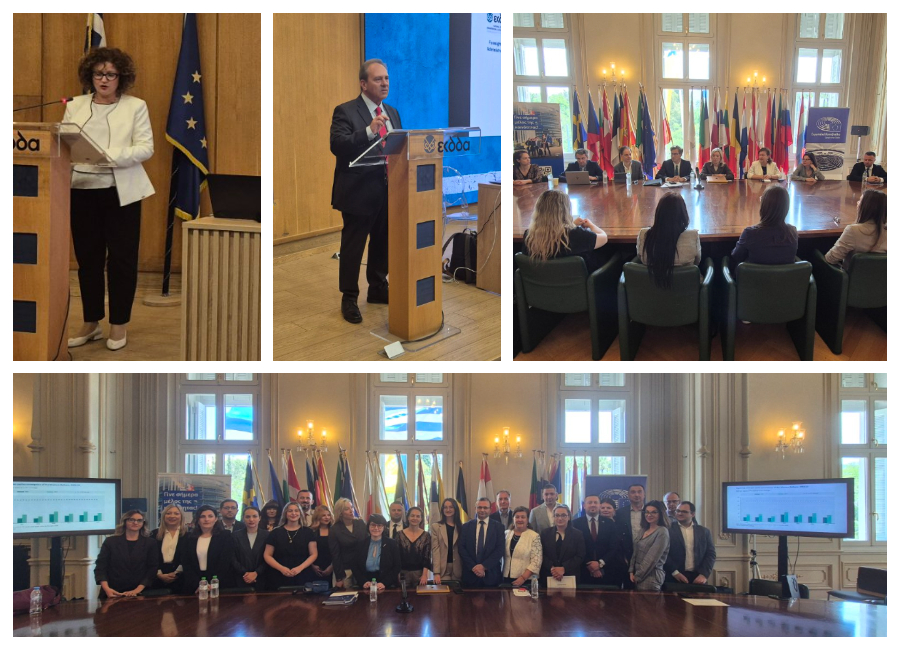
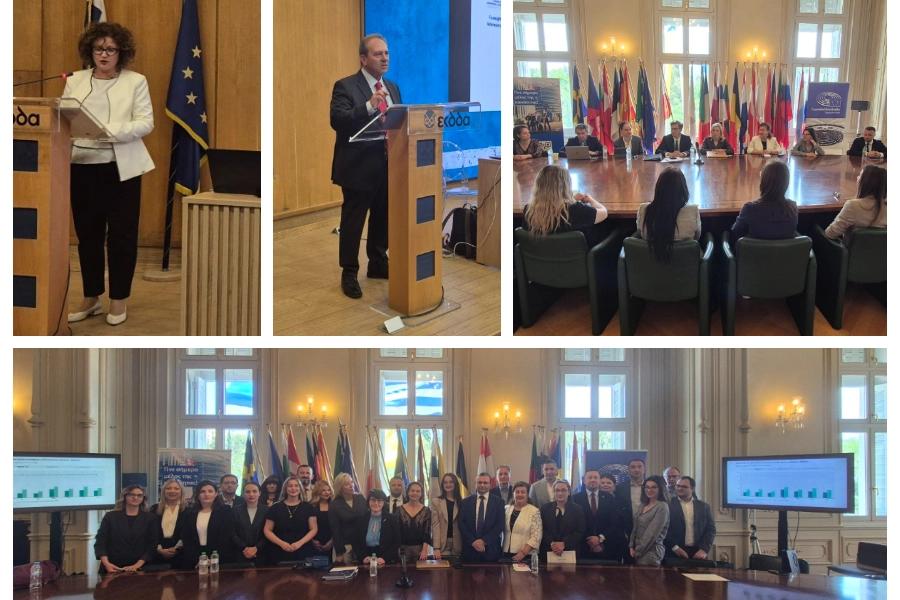
Opening the programme, Mr Vassilis Exarhos, President of EKDDA, underlined the importance of international cooperation and innovation-driven learning in strengthening modern public administration capacities. Welcome remarks were also delivered by Mr Athanasios Raptis, Director of the ESDDA, Ms Virginia Kokiou, Director within the Special Secretariat for Foresight, and Ms Jelena Mrdak, Director ad interim of ReSPA.
Speaking at the opening, Director Mrdak stressed that strong public institutions are not built overnight, but through continuous investment in people, learning and institutional transformation: “The continuity of this programme matters because meaningful public administration reform is never achieved through one-off trainings, but through sustained investment in people, knowledge and institutional capacity. By bringing together foresight, artificial intelligence and EU enlargement, we are helping administrations move from reactive governance to future-ready institutions capable of anticipating change, managing complexity and delivering better services to citizens. Greece’s accession experience reminds us that strong, EU-compatible institutions are built through persistence, learning and strategic adaptation - and that the true success of enlargement lies in building administrations that citizens trust.”
The first day focused on the growing importance of foresight methodologies in policymaking and public administration reform. In the opening session, “Why Foresight Matters for Public Administration and Enlargement”, Dr. Eleftheria Ftaklaki, Head of the International Relations Department of the Special Secretariat for Foresight, and Mr Ioannis Lambrou, Executive Member of the Secretariat, explored how foresight tools can help governments anticipate risks, improve policy quality and better align reforms with the EU accession process and SIGMA Principles.
Participants discussed how administrations across the region can shift from reactive governance to proactive, future-oriented institutions, while reflecting on what “future-ready administrations” could realistically look like by 2035.
The programme then moved from theory to practice through a series of interactive workshops led by Nikos Moustakidis, Maria Lyra, Ioannis Lambrou, Dr Eleftheria Ftaklaki and Androniki Tzomaka. Participants worked in smaller groups to identify institutional vulnerabilities, map future risks and opportunities, and test scenario-based approaches to decision-making and policy design.
One of the programme's central themes was the role of artificial intelligence in public governance. During the session “Trustworthy AI for Future-Ready Public Administrations: From European Values to Practical Reforms”, Androniki Tzomaka and Dr. Eleftheria Ftaklaki examined how AI can support evidence-based policymaking, improve service delivery and strengthen administrative efficiency — while remaining firmly grounded in European principles of transparency, accountability and ethics.
Participants also debated practical governance dilemmas through a case discussion titled “A digital by default public service in 2030 - where can AI realistically help, and what safeguards do we need?”, focusing on the balance between technological innovation and institutional responsibility.
At the same time, Mr Athanasios Raptis highlighted the growing need to integrate foresight thinking into the education and professional development of civil servants, stressing that administrations can only become future-ready if public officials themselves are equipped with strategic, adaptive and digital skills.
The second day offered participants a deeper understanding of Greece’s EU accession experience and today’s enlargement agenda through a high-level visit to the Greek Ministry of Foreign Affairs.
Welcoming participants, Ambassador Teresa Angelatou, Secretary General of the Ministry of Foreign Affairs, reflected on the long-term importance of institution-building in the European integration process.
Mr Georgios Polydorakis, Expert Minister Counsellor and Director of the Service of Diplomatic and Historical Archives, presented the historical trajectory of Greece’s negotiations towards accession to the European Communities in 1981, drawing important parallels with current enlargement processes in the Western Balkans and Eastern Partnership countries.
Mr Ioannis Mallikourtis, Coordinator for EU Affairs, discussed Greece’s positions on enlargement within the General Affairs Council, while Mr Georgios Karipsiadis, Legal Adviser and Head of the EU Law Department, addressed the broader geopolitical and legal challenges shaping the future of EU enlargement.
The programme concluded with a visit to the European Parliament Liaison Office in Athens, where participants explored how European institutions influence enlargement policy and democratic governance. Professors Nikos Tzifakis and Spyros Blavoukos delivered expert lectures examining EU enlargement as a geopolitical instrument and discussed the institutional dynamics, strategic priorities and political balances currently shaping the Western Balkans and Eastern Partnership agenda.
Closing remarks were jointly delivered by representatives of EKDDA, ReSPA and the Special Secretariat for Foresight, followed by the awarding of certificates of participation.
Beyond discussions on foresight and artificial intelligence, the programme sent a broader message: future-ready public administrations are built through cooperation, long-term learning and trust in institutions. By continuing this high-level partnership for a second consecutive year, ReSPA and EKDDA reaffirmed their shared commitment to strengthening resilient, innovative and citizen-centred administrations capable of leading the region through both EU integration and the challenges of the future.