

ReSPA Kicks Off the First Steering Committee Meeting to Strengthen Strategic Oversight
8 June 2026, online
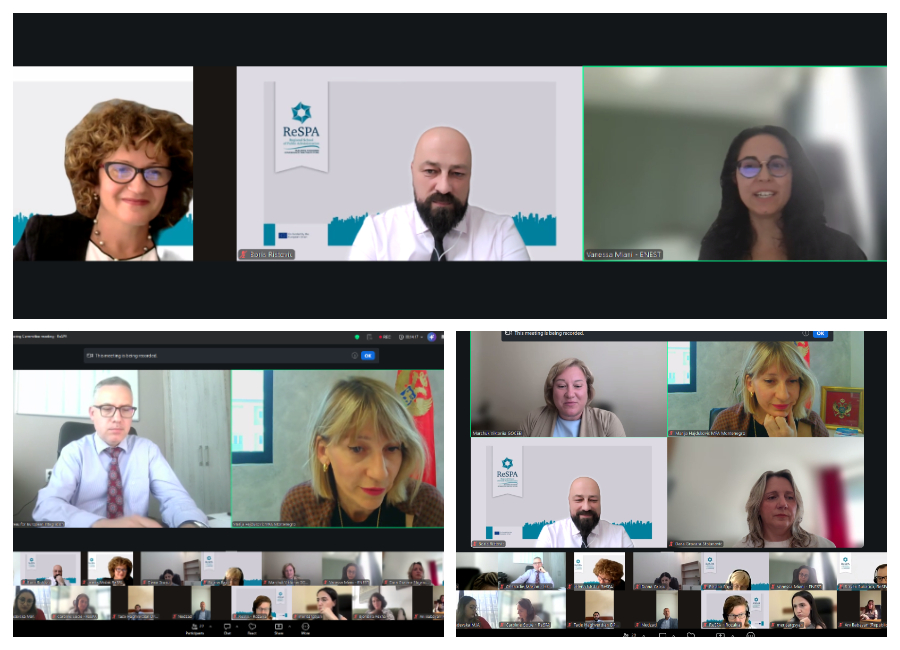
The first session of the Project Steering Committee Meeting brought together representatives of beneficiary administrations from the Western Balkans and the Eastern Neighbourhood, as well as representatives of the European Commission's Directorate-General for Enlargement and Eastern Neighbourhood (DG ENEST) and ReSPA. The Steering Committee serves as the project's principal strategic body, providing guidance on implementation, fostering ownership among participating administrations, and ensuring alignment with EU integration priorities and public administration reform objectives.
Opening the session, Jelena Mrdak, ReSPA Director a.i., welcomed participants and emphasized the importance of regional cooperation in advancing effective, citizen-oriented, and EU-aligned public administrations. "Today marks an important moment for ReSPA and for our wider community of public administrations. This project is not only a new programme of activities. It is a shared commitment to stronger institutions, more professional public services, and administrations that can effectively support the European future of our regions," said Mrdak and added, "With this sixth European Commission grant, we are opening a new chapter in ReSPA's development. For the first time, the project brings together not only ReSPA members from the Western Balkans, but also partners from Armenia, Moldova, Ukraine and Kosovo*. This broader regional scope creates new opportunities for mutual learning, exchange of experience and cooperation in advancing public administration reform and EU integration priorities."
Vanessa Miani, Policy Assistant at DG ENEST, reaffirmed the European Commission's commitment to supporting reform efforts across both regions through enhanced cooperation, knowledge exchange, and capacity development.
During the meeting, Boris Ristović, ReSPA Programme Coordinator, presented the European Commission grant, outlining the ReSPA’s objectives, thematic priorities, planned activities, and support instruments available through ReSPA, as well as the 2026 Plan of Work that aims to strengthen public governance and support EU integration processes by promoting modern, accountable, and resilient public administrations. Ristović underlined that ReSPA, through a combination of policy dialogue, capacity-building activities, technical assistance, peer learning, and regional cooperation, advances key public administration reform priorities across the participating administrations.
The discussion that followed provided an opportunity for Steering Committee members from the Western Balkans and Eastern Neighbourhood to exchange views on implementation priorities, expected results, and opportunities for enhanced cooperation. Participants welcomed the project's regional dimension and underlined the value of sharing experiences and good practices among administrations facing similar reform challenges.
Concluding the meeting, Steering Committee members reaffirmed their commitment to working on the successful implementation of the project and agreed on the importance of maintaining close coordination throughout its duration. The Committee will continue to meet regularly to provide strategic guidance and monitor progress, ensuring that project activities effectively support public administration reform and EU integration efforts across the Western Balkans and Eastern Partnership region.