

Smart Investment for Strong Governance: ReSPA and International Partners Advance Public Investment Management across the Western Balkans and Eastern Neighbourhood
23-24 November 2026, Zagreb
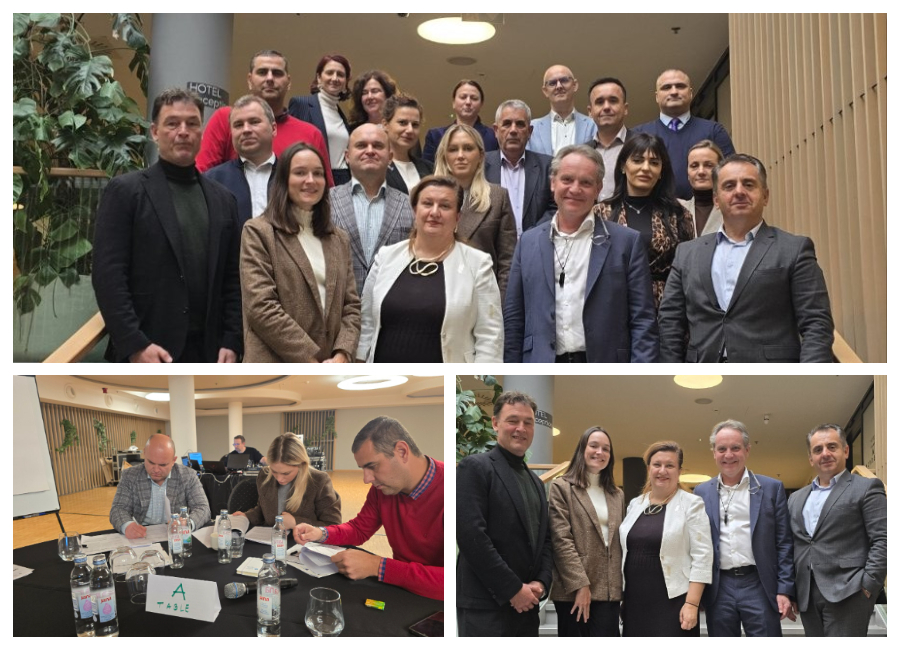
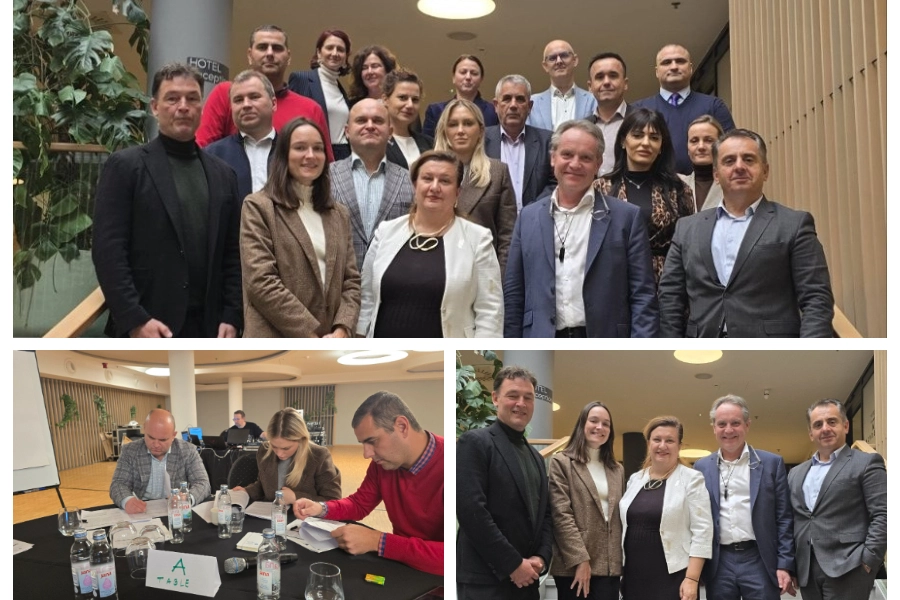
Turning public resources into better infrastructure, stronger economies and tangible benefits for citizens requires more than access to funding. It requires sound investment decisions, robust institutional frameworks and the capacity to deliver. Against this backdrop, ReSPA organised the regional capacity-building workshop “Smart Investment 4 Strong Governance: Single Project Pipeline and Delivery”, bringing together representatives of ministries of finance, investment committees, central planning bodies and line ministries from the Western Balkans, Moldova, Ukraine and Armenia, alongside leading international experts.
Drawing on the complementary expertise of the SIGMA Programme, the World Bank, the International Monetary Fund (IMF), and Croatian and French institutions, the workshop addressed the entire public investment cycle - from strategic planning, project appraisal and prioritisation to financing, implementation and long-term asset management.
With substantial EU funding opportunities and growing infrastructure needs across both regions, strengthening Public Investment Management (PIM) is increasingly important for economic convergence, fiscal sustainability and European integration.
Opening the workshop, Rozalija Karchicka Vasilevska, ReSPA PFM Programme Manager, highlighted the progress achieved in establishing regulatory and institutional frameworks across the region, while underlining the persistent gap between formal requirements and their implementation. Referring to the European Court of Auditors’ findings, she noted that less than one fifth of the €2.7 billion in EU funds allocated under the Western Balkans Investment Framework between 2015 and mid-2025 had been disbursed: “A good project is decided long before the first stone is laid, in appraisal, in selection and in the budget. That is where we will focus our work over these two days,” emphasised Karchicka Vasilevska.
Building on the longstanding cooperation between ReSPA and OECD/SIGMA in advancing public administration reform, the workshop placed particular emphasis on establishing a Single Project Pipeline (SPP) as a cornerstone of effective public investment governance.
Ferdinand Pot from SIGMA presented SIGMA Paper No. 80, The Single Project Pipeline in Public Investment Management, and its 11 principles of good practice, developed to guide EU candidate countries and potential candidates. His presentation explored how a single, government-wide pipeline of positively appraised projects, encompassing all sectors and financing modalities, can strengthen investment prioritisation, reduce fiscal risks and ensure that only sufficiently mature projects are considered for financing through the medium-term budget process. Particular attention was devoted to strategic alignment, rigorous project preparation, independent appraisal, realistic cost estimates and safeguards against cost overruns and delays.
The session demonstrated the value of ReSPA and SIGMA's complementary roles: connecting European standards and evidence-based policy guidance with regional capacity-building, peer learning and practical support for their implementation.
Kai Kaiser, Jonas Arp Fallov and Pablo Andres Guzman Abastoflor from the World Bank contributed expertise on digital solutions for public investment and asset management through the PIM-PAM initiative, complemented by perspectives from the Investment Committees of North Macedonia and Moldova. Built around the 16 dimensions of the InfraGov 2.0 framework, the initiative addresses three interconnected priorities: rationalising existing investment portfolios, strengthening the pipeline of new projects and keeping existing public assets productive. The session introduced practical digital and AI-enabled decision-support tools, including country benchmarking dashboards, electronic cost-benefit analysis, project readiness assessment, climate change screening, geospatial planning and the Portfolio Doctor – tools designed to improve investment decisions, infrastructure accessibility and project delivery.
Gorana Roje, Head of Unit for State Asset Management Strategic Planning and EU Projects at Croatia’s Ministry of Physical Planning, Construction and State Assets, explored the transition from administrative to strategic public asset management. Drawing on Croatian and international experiences, she highlighted the importance of reliable asset databases, multi-year planning, sustainable maintenance funding and life-cycle management in preserving the value of public investments.
A practical Project Clinic, facilitated by Rozalija Karchicka Vasilevska and Zoran Martinovski, PIM expert, brought these perspectives together through real infrastructure cases, including Croatia’s Pelješac Bridge, alongside regional projects affected by cost overruns and implementation delays. Participants examined the factors determining project success and the safeguards needed throughout the investment cycle.
The second day addressed public investment efficiency from institutional, fiscal and financing perspectives.
Jamie Carter, Regional Advisor at the IMF’s Fiscal Affairs Department, focused on the findings of the IMF Public Investment Management Assessments (PIMAs), highlighting regional reform challenges and the importance of narrowing the gap between institutional design and effective implementation.
Caroline Raiffaud, Project Director at FIN INFRA, the French Treasury’s infrastructure advisory unit, presented the French experience in appraising, financing and structuring major infrastructure projects, including public-private partnerships (PPPs).
Drawing on concrete examples - the Grand Paris Express, the Brittany-Pays de la Loire high-speed railway and the South Europe Atlantic high-speed railway - she explored different financing and contractual models, socio-economic appraisal, budgetary affordability and the allocation of risks between public and private partners. The French experience offered valuable insights into how specialised institutional expertise and independent assessment can strengthen investment decisions, safeguard public resources and support the delivery of financially viable infrastructure projects.
Moving beyond knowledge exchange, the workshop culminated in a Reform Design Lab, led by Zoran Martinovski and Rozalija Karchicka Vasilevska, designed to enable participating administrations to assess their progress, identify institutional bottlenecks and formulate concrete national reform priorities through peer feedback.
The Zagreb workshop marks the beginning of a structured Public Investment Management strand within ReSPA’s Public Financial Management Programme, building on its previous Smart Control and Smart Procurement initiatives. Its findings will inform the ReSPA PFM Thematic Working Group meeting on 25–26 November 2026 and shape the 2027 PFM Programme, envisaging further specialised training, webinars, round tables, peer exchanges and study visits, including potential cooperation with French institutions on infrastructure financing and PPPs.