


Strategic Dialogue in Madrid Sets the Foundations for Institutional Development towards 2034
24-26 November 2026, Madrid
Charting ReSPA’s strategic direction towards 2034, strengthening its institutional and financial sustainability, and advancing its role in public administration reform, regional cooperation and EU integration were at the heart of the Development Session and the meetings of ReSPA’s Governing Board and Budget Committee.
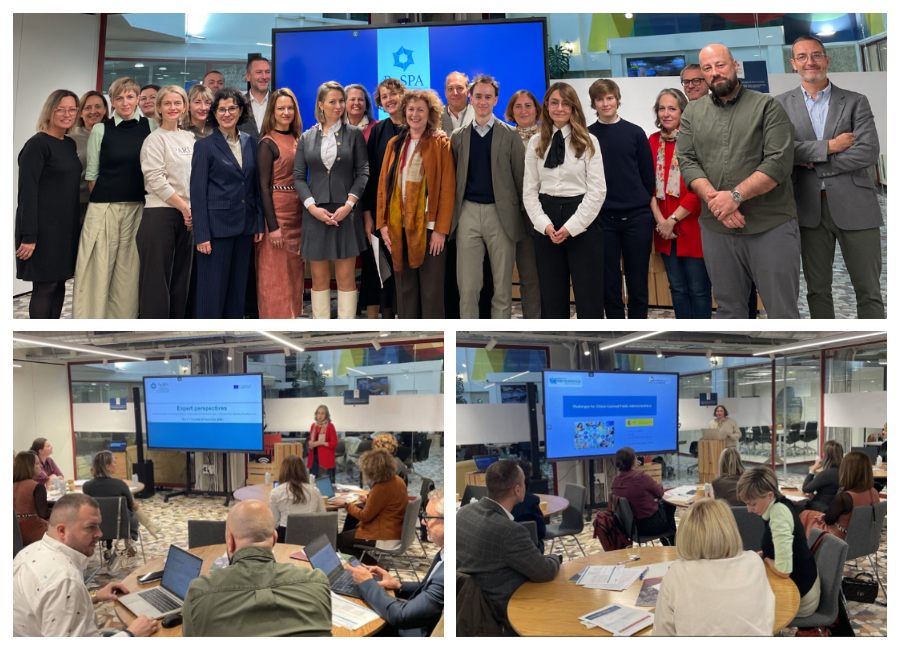
Bringing together representatives of ReSPA Members, European and Spanish institutions, experts and the ReSPA Secretariat, the three-day programme marked an important step towards developing ReSPA’s Institutional Development and Financial Sustainability Strategy to 2034, in the context of evolving EU enlargement dynamics, the proposed EU Multiannual Financial Framework (MFF) 2028–2034 and emerging public administration needs.
“ReSPA’s future must be shaped by the evolving needs of our Members and participating administrations, the dynamics of European integration and our shared ambition to build stronger public institutions. Our vision towards 2034 is to build on what makes ReSPA distinctive while developing the capacities, partnerships and institutional resilience needed for the next chapter of regional and European cooperation,” highlighted Jelena Mrdak, ReSPA Director, ad interim.
The first day brought European institutional experience and external expertise into ReSPA’s strategic discussions.
Tobías Jung, Secretary General of FIAP, shared practical insights into EU pillar assessment and delegated cooperation, addressing institutional requirements and operational implications relevant to ReSPA’s future development.
Representatives of Spain’s Ministry for Digital Transformation and the Civil Service - Xose Areses, Violeta Lanzas, Javier Barace, Teresa de Martín, Lucía Carmona and María-Ángeles Martínez – provided perspectives from the European Public Administration Network (EUPAN) on administrative simplification, citizen-centred governance, civil service transformation and emerging capacity needs.
The proposed MFF 2028–2034 and its implications for enlargement, regional cooperation, and future financing opportunities were explored from the perspectives of Spain’s Ministry of Foreign Affairs, with Almudena Martín-González and Carmela Barcia listed as contributors, and the European Commission, represented by Ondrej Semerak (DG ENEST).
Building on these expert contributions, the second day focused on ReSPA’s strategic positioning, comparative advantage and potential development pathways towards 2034. Through interactive World Café sessions and facilitated discussions, participants assessed institutional strengths, emerging opportunities and challenges, and explored alternative development scenarios ranging from consolidation to selective development to broader institutional expansion.
Particular attention was devoted to ReSPA’s future role, services, partnerships, geographical reach, and governance arrangements, as well as opportunities to diversify funding sources and strengthen organisational capacities. These discussions provided a foundation for identifying strategic priorities and informing further consultations and the development of ReSPA’s long-term strategy.
The third day was dedicated to the meetings of ReSPA’s Governing Board and the 55th Budget Committee, reinforcing the link between institutional development, financial sustainability and accountability. The agenda addressed the implementation of the 2026 Core Budget, national contributions, liquidity and cash management, the nomination of an independent auditor and updates on ongoing projects.
The full payment of national contributions for 2026 by all five ReSPA Members reflects their continued commitment to the institution and regional public administration cooperation.
The programme also included an institutional visit to the Spanish Ministry of Foreign Affairs, providing an opportunity to further strengthen institutional dialogue with Spain.
The Madrid programme represents an important milestone in preparing ReSPA for its next chapter - strengthening its institutional resilience, deepening European partnerships and enhancing its capacity to support public administrations in delivering reforms and advancing European integration.