

ReSPA Supports North Macedonia in Advancing the SMART/MK 2030 Digital Transformation Agenda
Skopje, 19 December 2025
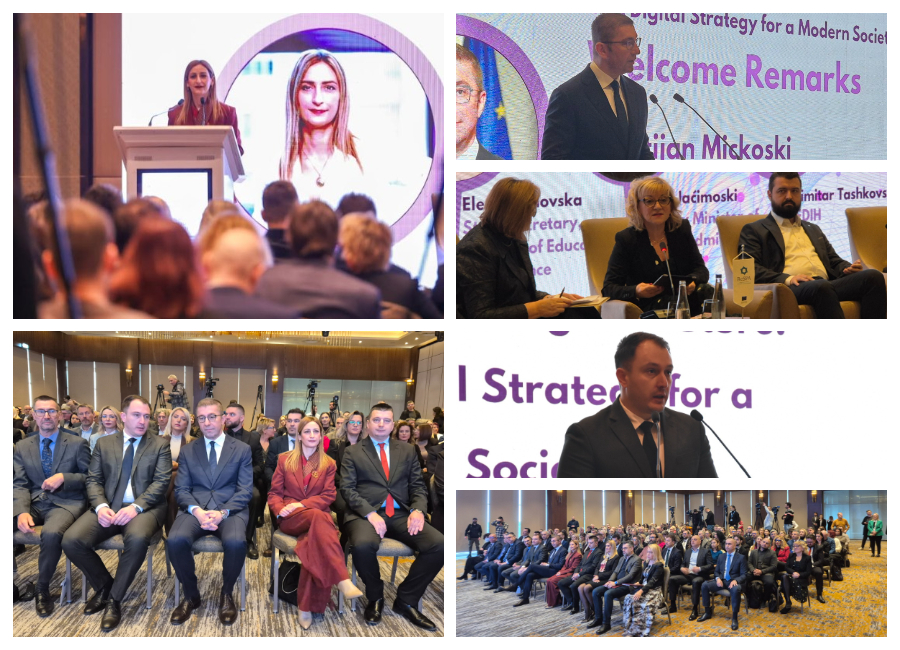
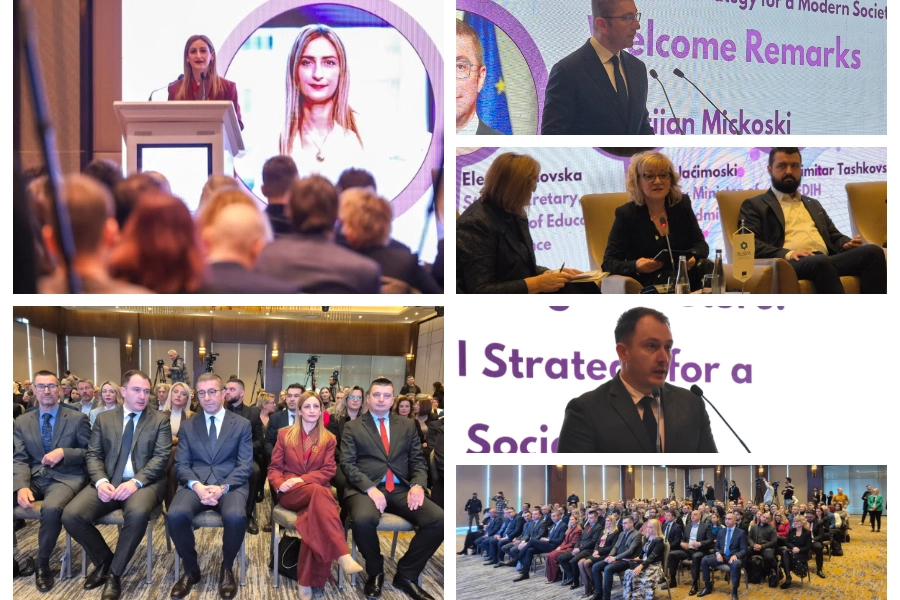
ReSPA supported the high-level panel discussion “Transforming the Future: Digital Strategy for a Modern Society”, dedicated to advancing the implementation of North Macedonia’s National ICT Development Strategy SMART/MK 2030.
Adopted by the Government in October 2025, the SMART/MK 2030 Strategy provides a comprehensive framework for digital transformation aligned with the priorities of the EU Digital Europe Programme. The event gathered senior policymakers, EU representatives, public administration leaders, academia, and business representatives to explore how coordinated institutional action can turn strategic priorities into measurable results.
The panel was opened by Prime Minister Hristijan Mickoski, Ben Nupnau, Deputy Head of the EU Delegation, and ReSPA Director Maja Handjiska-Trendafilova. In her address, Director Handjiska-Trendafilova emphasised that SMART/MK 2030 represents a timely and ambitious milestone in North Macedonia’s digital transformation journey. Drawing on regional experience, she underlined that while adopting strategies is essential, their effective implementation remains the real challenge. In this context, she stressed: “ReSPA is proud to support this process by strengthening institutional capacities, investing in digital skills, and fostering genuine partnerships across public administrations, the private sector and academia—ensuring that digital strategies are transformed into concrete services and real value for citizens and businesses.”
Stefan Andonovski, Minister of Digital Transformation, presented the SMART/MK 2030 Strategy, structured around four pillars: modern ICT infrastructure, digital skills, e-governance, and digital transformation of businesses and innovation. The presentation set the scene for the thematic panels that followed:
Panel 1: ICT Infrastructure and Connectivity
Moderated by Ivan Ilioski, the panel focused on strengthening connectivity and closing the digital divide between urban and rural areas. Jeton Akiku (Agency for Electronic Communications), Stefan Volkanovski (Ministry of Transport and Communications), Goran Marković (Makedonski Telekom), Metodija Mirchev (A1 Macedonia), and Vladimir Atanasovski (FEIT), discussed investments, regulation, and public-private cooperation for nationwide high-speed connectivity.
Panel 2: Digital Skills – Investing in People
Moderated by Olivera Jakšić Trantalovska, the panel placed strong emphasis on human capital as the backbone of digital transformation. Bojana Bajić (ReSPA), highlighted the importance of systematic capacity-building for public servants, alignment with EU digital competencies frameworks, and regional cooperation as a catalyst for sustainable digital skills development with the adopted digital competence framework for public servants. The panel also featured Petre Iameski (FINKI), Elena Ivanovska (Ministry of Education and Science), Laze Jakimoski (Ministry of Public Administration), and Dimitar Tashkovski (EDIH), who discussed education reform, labour-market needs, and cybersecurity awareness
Panel 3: E-Governance and Public Service Delivery
Moderated by Stanislav Vasilkovski, this panel addressed the modernization of public services, administrative simplification, and interoperability. Contributions came from Julijana Pavkovska-Bocevska (Ministry of Local Self-Government), Goran Gjeorgjievski (Union of Chambers of Commerce), Bardhyl Jashari (Metamorphosis), Vasko Kronevski (Nextsense), and Nikica Mojsoska-Blazhevski (Macedonia2025), highlighting the role of digital services in improving trust and efficiency
Panel 4: Digital Transformation of Businesses and AI
The final panel, moderated by Sandra Anastasovska, explored innovation, artificial intelligence, and business competitiveness. Panellists included Besar Durmishi, Minister of Economy and Labour, Igor Nikoloski (INOVA Agency), Anita Stamnova (Central Registry), Jordan Dimitrovski (MASIT), and Prof. Dimitar Trajanov (FINKI), focusing on linking education, innovation ecosystems, and the private sector
The panel concluded with remarks by Gordana Klinčarova, State Secretary at the Ministry of Digital Transformation, reinforced the importance of international support, expressed gratitude to the panellists for their valuable insights and advice, and underlined that the overarching goal is for public administration to function as a true service for citizens. She also emphasised that the Ministry remains open to further cooperation, in line with the call made during the discussion. Finally, she noted that the process did not begin with this strategy, but that the intention is to accelerate already ongoing reforms and initiatives.
The Ministry launched service terminals and e-mailbox services as concrete solutions that reduce bureaucracy, increase efficiency and enhance trust.
ReSPA reaffirmed its commitment to supporting North Macedonia and the wider Western Balkans through capacity-building programmes, peer learning, and evidence-based policy support, ensuring that strategies like SMART/MK 2030 deliver tangible results for citizens, businesses, and public administrations alike.