

ReSPA at CEFTA Week 2025: Advancing Regional Trade Integration and Europe-Oriented Reforms
3 December 2025, Pristina
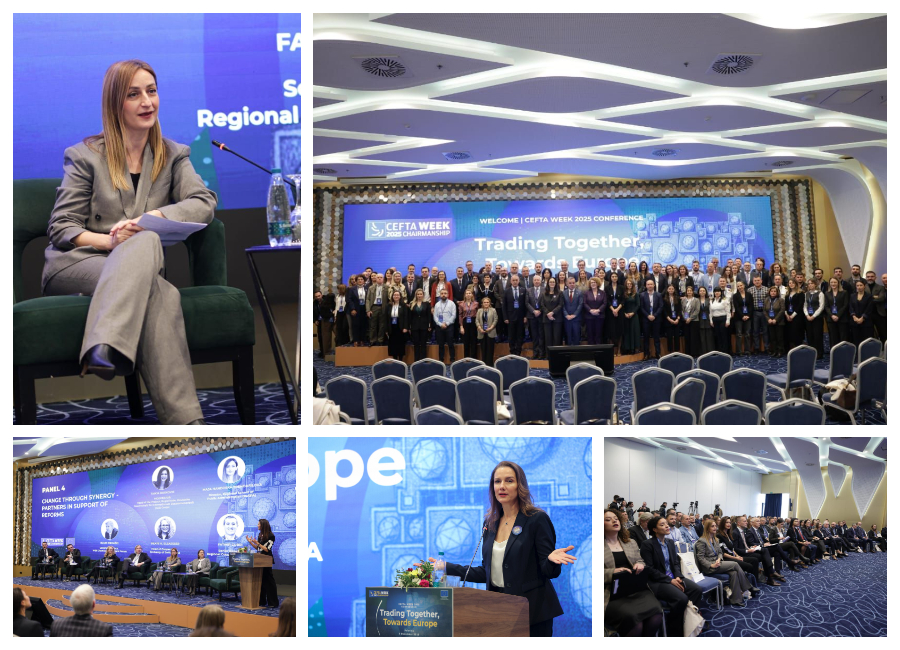
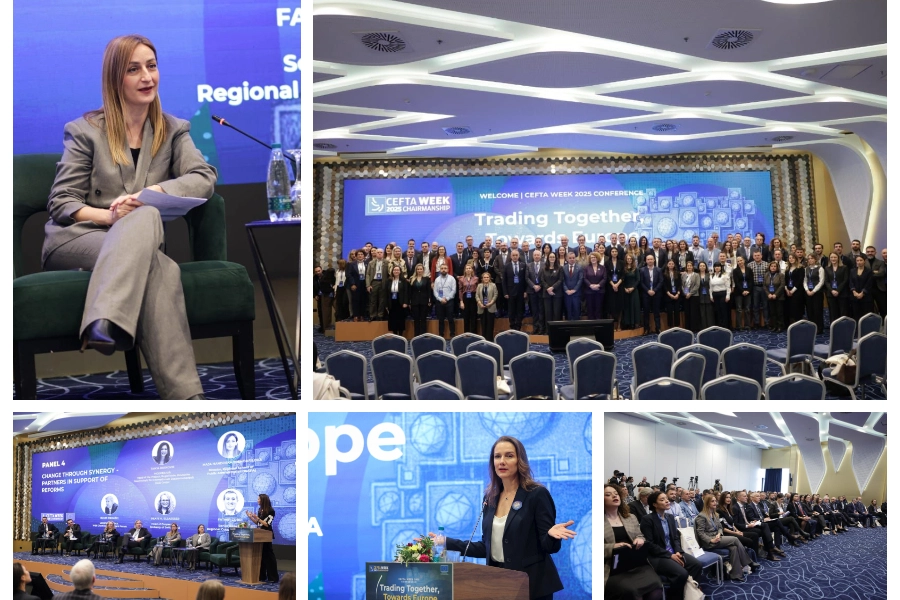
The flagship conference of CEFTA Week 2025, held under the theme “Trading Together, Towards Europe,” gathered ministers, senior officials, business leaders, experts, and regional partners in Pristina to chart the next phase of trade cooperation in the Western Balkans and Moldova. The event marked the culmination of a three-day programme dedicated to strengthening regional economic integration and accelerating progress “towards Europe.”
The conference opened with high-level remarks by Rozeta Hajdari, Minister of Industry, Entrepreneurship and Innovation, Valentina Superti, Director, Directorate-General for Enlargement and Eastern Neighbourhood, Amer Kapetanović, Secretary General, Regional Cooperation Council, Matej Zakonjšek, Director, Transport Community and Pranvera Kastrati, Director, CEFTA Secretariat and continued with a strategic panel, “CEFTA in a Changing World – What Future for Regional Trade Cooperation?” Panellists explored CEFTA’s evolving role amid shifting global alliances, supply-chain pressures, and climate-driven policy changes. The discussion highlighted CEFTA’s contributions to competitiveness and resilience, its role within the Common Regional Market 2.0, and its alignment with the EU's Growth Plan for the Western Balkans and Moldova. Speakers highlighted both the tangible achievements so far and the challenges that require stronger, coordinated regional action.
A ceremonial Chair-in-Office handover marked the conclusion of CEFTA’s 2025 Chairmanship and the formal launch of the 2026 mandate.
ReSPA featured prominently in the panel “Change through Synergy – Partners in Support of Reforms,” which brought together leading development partners to discuss how coordinated support can amplify regional reform efforts. The session, featuring ReSPA Director Maja Handjiska-Trendafilova, Denise Penello Rial (UNCTAD), David Piegazki (WB6 CIF), Fatmir Curri (RCC), and Beate Katja Elsässer (Swiss Cooperation), showcased concrete examples of donor alignment producing measurable impact across CEFTA economies.
Maja Handjiska-Trendafilova’s intervention highlighted how joint initiatives strengthen public institutions across the region, improving their capacity to deliver reforms that directly support CEFTA’s goals of sustainable growth, seamless trade, and EU convergence: “Regional cooperation delivers real impact only when institutions, partners, and donors work in synergy. Through CEFTA, we see how coordinated support, shared expertise, and evidence-based policymaking can turn complex reforms into tangible benefits for businesses and citizens. ReSPA remains committed to strengthening the capacities of public administrations across the Western Balkans, ensuring that our region advances together-stronger, smarter, and closer to the European Union.”
The panel confirmed that coordinated regional support significantly boosts the effectiveness of institutions – including ReSPA – and called for even tighter cooperation among all stakeholders.
The panel “Gradual and Functional EU Integration of CEFTA” examined pragmatic ways to advance EU alignment ahead of full membership. Representatives from government, business, and the expert community discussed how early adoption of EU standards, participation in selected EU programmes, and deeper policy cooperation can generate tangible benefits for companies and citizens.
Two dynamic sessions pushed the conversation toward the future: “Beyond Digitalisation: AI as a Catalyst for Transformative Trade” explored how artificial intelligence can streamline customs procedures, support evidence-based policymaking, and enable smarter, data-driven trade systems. A Mini Debate: “Achieving Single Market-Style Recognition by 2026” challenged participants to consider whether CEFTA could reach EU-level recognition frameworks in at least three industrial sectors within the next year.
Participants also engaged in an interactive case study, “Make Trade Easier – Paperless, Faster, Recognised,” following a product’s journey across CEFTA borders. The session demonstrated how tools like SEED+ reduce paperwork, expedite customs processes, and enhance inter-agency coordination – illustrating how complex reforms translate into tangible, everyday benefits for traders.
The conference concluded with a forward-looking session, “Services, Skills, and the Digital Marketplace – Toward a Frictionless Regional Market in CEFTA.” Speakers examined the next steps toward enabling free movement of services and skilled professionals, strengthening digital regulations for e-commerce, and shaping a modern digital marketplace that supports seamless business operations across the region.
They emphasised how reforms in professional qualification recognition, digital transformation, and skills mobility will open new opportunities for businesses, entrepreneurs, and consumers – bringing the region closer to a fully integrated, competitive market aligned with EU standards.