

Webinar on administrative simplifications – toward strengthened public-business sector cooperation in the Western Balkans
16 December 2025, online
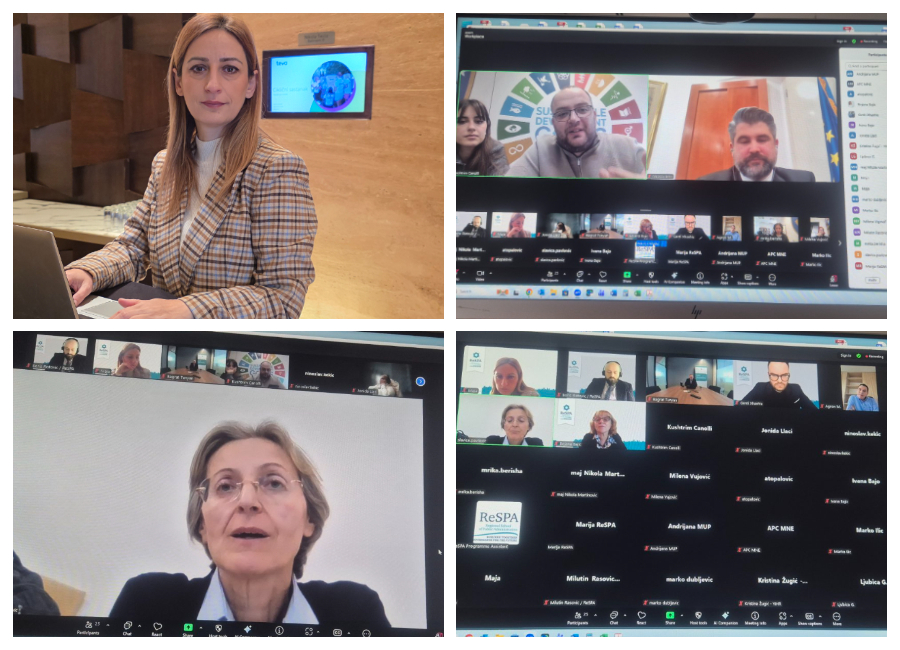
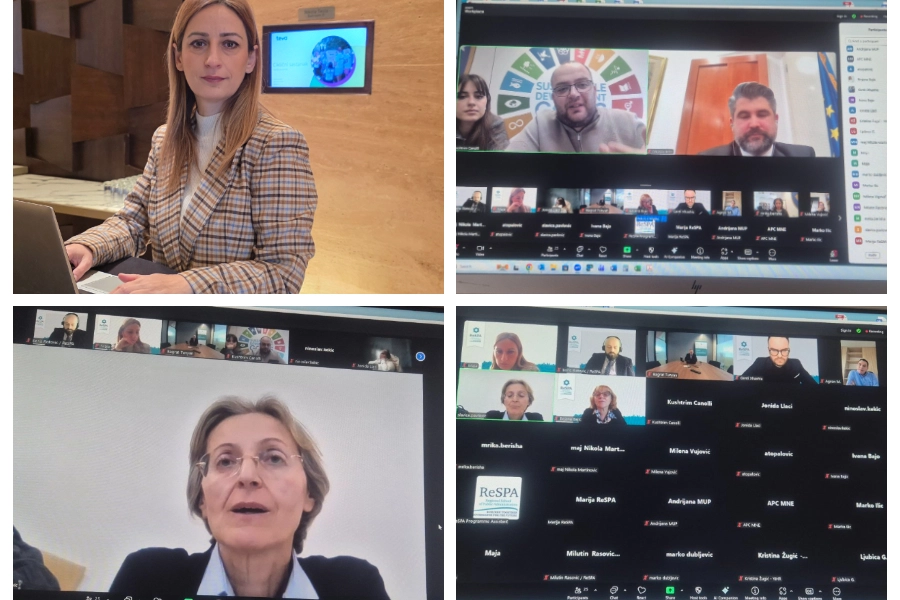
ReSPA hosted a regional webinar titled “Administrative Simplifications in the Western Balkans: Public-Business Sector Cooperation,” bringing together participants from public administrations and business associations across the Western Balkans. The event served as an important platform to discuss how simplifying procedures and reducing administrative burdens can improve public service delivery, foster innovation, and enhance the competitiveness of the regional business environment.
Framed within the EU’s “Simpler and Faster Europe” agenda, which sets ambitious targets to reduce regulatory burdens by 25% through 11 flagship initiatives, the webinar highlighted the crucial role of better policymaking, strong enforcement, and meaningful engagement with citizens and businesses in achieving these goals. The discussions also reflected the findings of the 2024 SIGMA Public Administration Report, which emphasised limited progress in systematically planning simplification measures and pointed to delays in digitalisation and interoperability as key obstacles in the region.
Director Handjiska Trendafilova opened the event by underlining that administrative simplification is not a technical exercise, but a core element of good governance and a decisive factor for trust, competitiveness, and EU integration in the Western Balkans. She highlighted ReSPA’s role as a regional platform for dialogue between public administrations, international partners, and the business community, with a strong focus on turning reform commitments into tangible results for citizens and businesses: “Administrative simplification is the face of the state that citizens and businesses encounter every day. In the Western Balkans, it is no longer a ‘nice to have’, but a prerequisite for competitiveness, investment and EU integration. Our task is to move from strategies and laws to visible, practical results-simpler procedures, digital services and real improvements that people can feel in their daily lives.”
Bagrat Tunyan, Senior Advisor and Professional Team Lead for Strategic Planning and Policy Development at the OECD/SIGMA Programme, outlined the key challenges in controlling the creation of new administrative burdens during policymaking and presented OECD/SIGMA recommendations for improving the quality and coherence of regulatory processes across the region.
The panel session “Administrative simplification in practice” featured concrete examples and insights from Western Balkan public institutions and the business sector.
Representing public administrations, Ninoslav Kekić, Deputy Director of the Public Policy Secretariat of the Republic of Serbia, presented Serbia’s experiences, including the implementation of the E-papir programme and broader efforts to streamline administrative procedures, while Kushtrim Canolli, Coordinator for the Administrative Burden Reduction Process at the Strategic Planning Office of Kosovo*, discussed the implementation of Kosovo’s 2022–2027 Policy on Administrative Burden Reduction and highlighted the importance of digital solutions for easing access to public services.
Representing the business community, Slavica Pavlovic, Head of Associations Department at the Chamber of Economy of Montenegro, shared the results of a recent business climate survey and highlighted the challenges companies face when accessing public services. He also noted that the Western Balkan chambers, through their affiliation with Eurochambres, have aligned with EU-level recommendations for reducing administrative burdens.
Boris Ristović, ReSPA Programme Manager, closing the event, underlined: “administrative simplification and strengthened digital interoperability must remain priorities for Western Balkan governments, especially in the context of implementing the Reform Agendas adopted in 2024 under the EU Growth Plan. Continuous dialogue between public administrations and the business sector is essential for designing durable, user-oriented, and effective simplification measures.”